
Project Priority Worksheet (QUANTITATIVE)
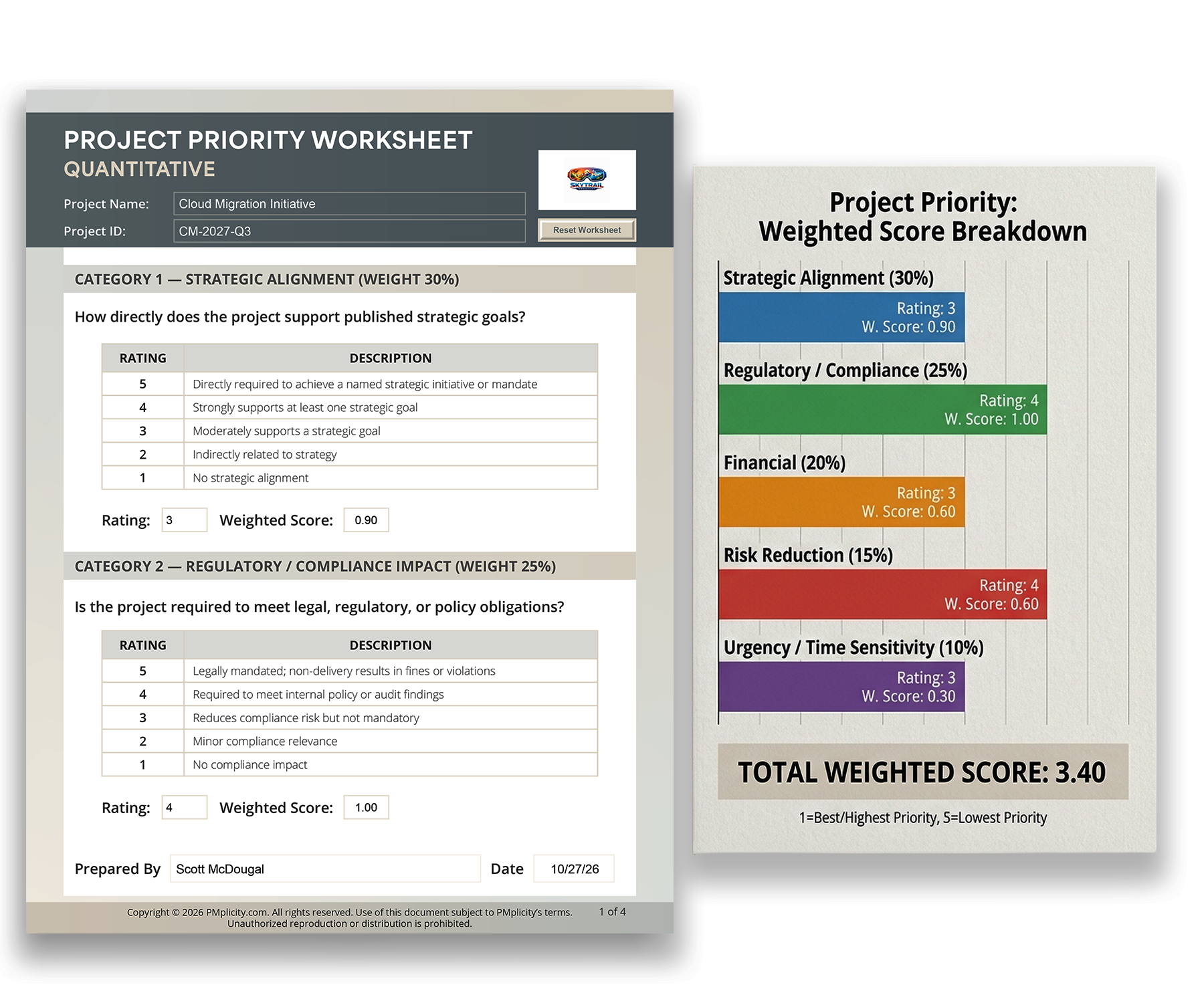


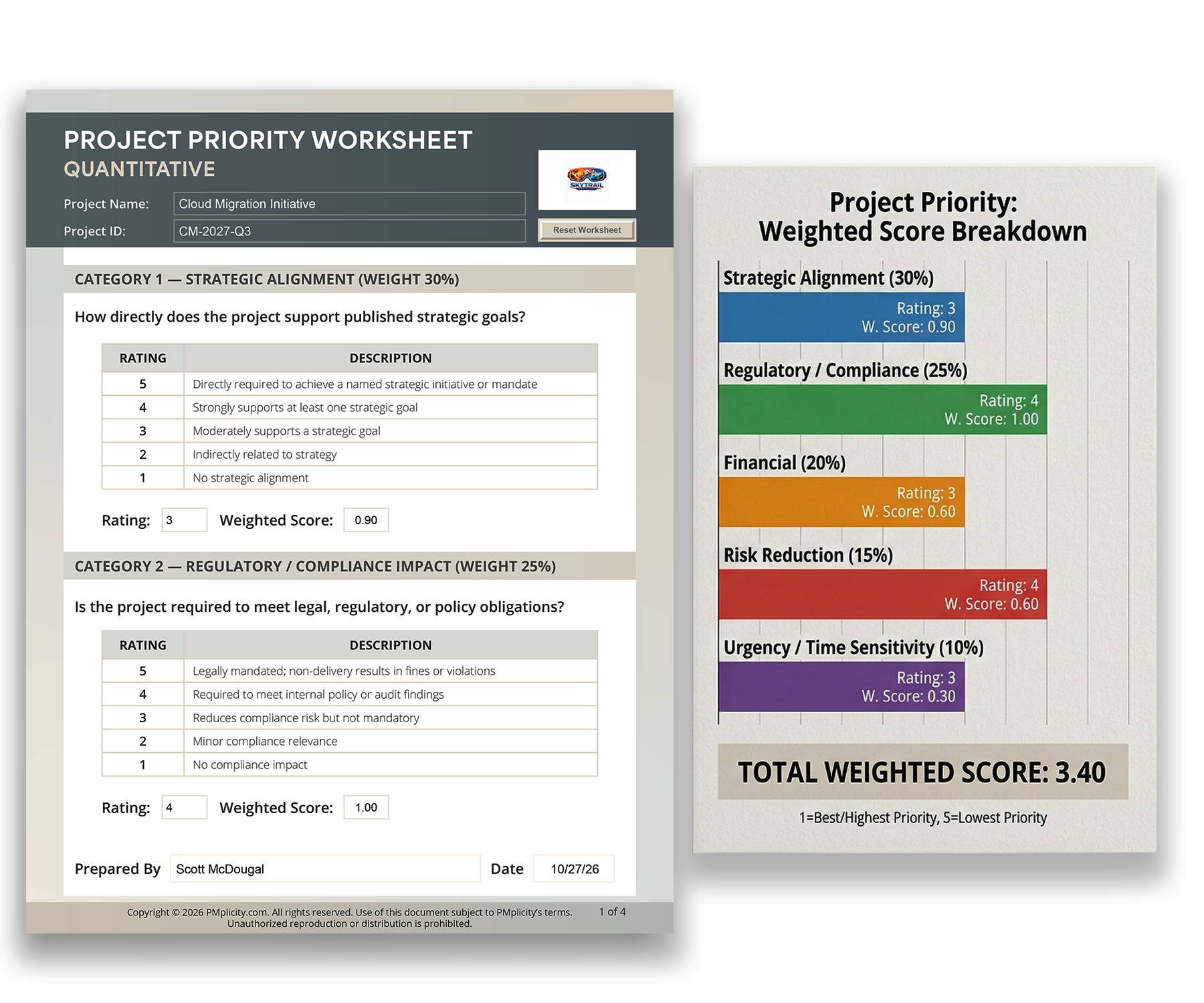
Evaluate and prioritize projects with a structured, data‑driven approach. This worksheet applies weighted scoring across five categories and generates a defensible priority score—enabling responsible sequencing, stronger strategic alignment, and smarter use of organizational capacity.
Prioritize the Highest-Impact Initiatives
The PMplicity® Project Priority Worksheet (Quantitative) provides a clear, structured way to compare proposed projects and understand their strategic contribution. Designed for practical intake and planning, it highlights the factors that matter most—strategic alignment, regulation and compliance, financial impact, risks, and urgency—so teams can quickly see where each initiative stands.
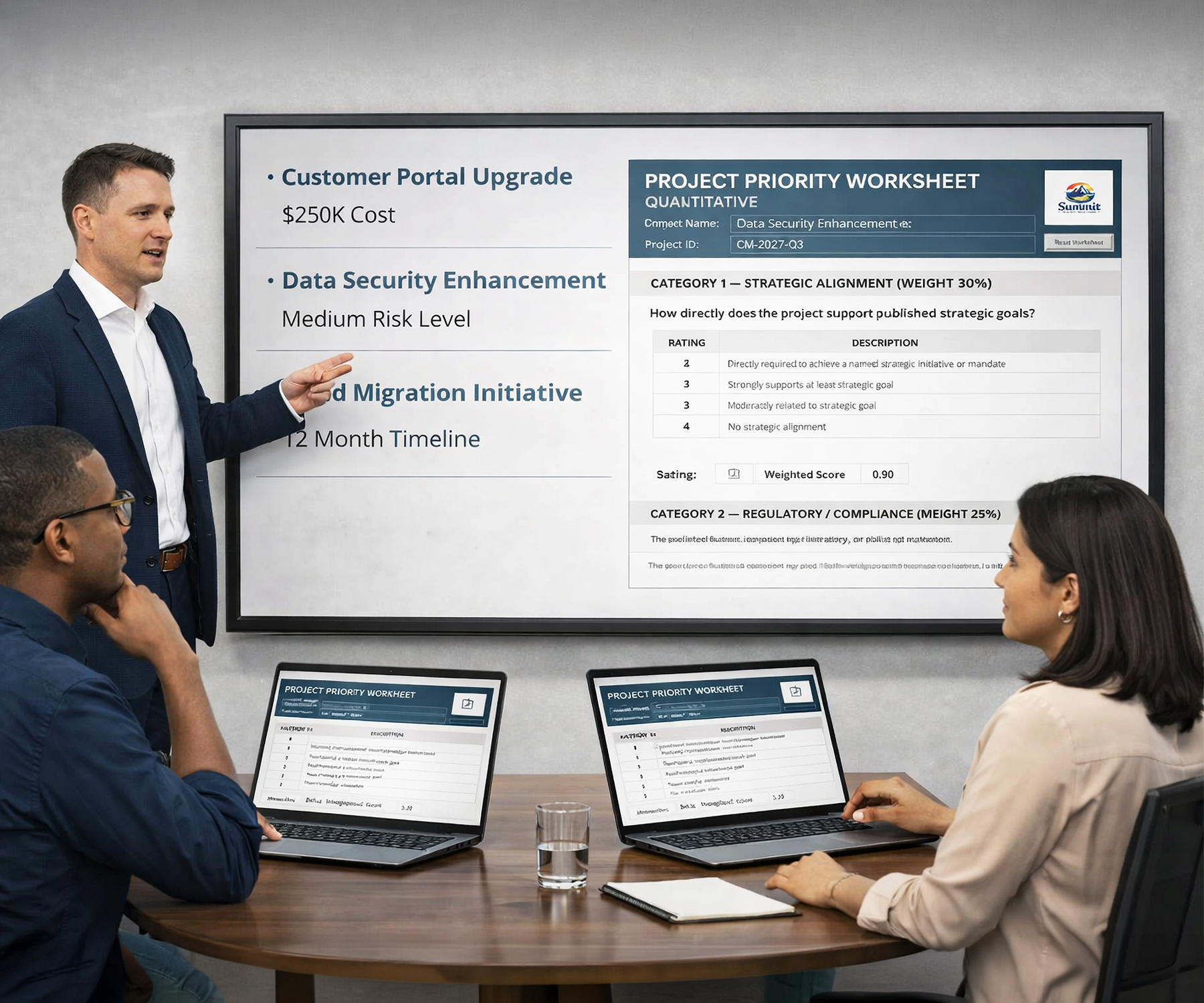
By standardizing how proposals are assessed, the worksheet strengthens Organizational Project Management (OPM), reduces subjective debate, surfaces strengths and trade‑offs, and ensures limited capacity is directed toward initiatives that advance organizational goals. It supports downstream planning by clarifying which initiatives should be sequenced first, where resources should be allocated, and how to maintain a clear, strategically aligned project pipeline.
What's Included
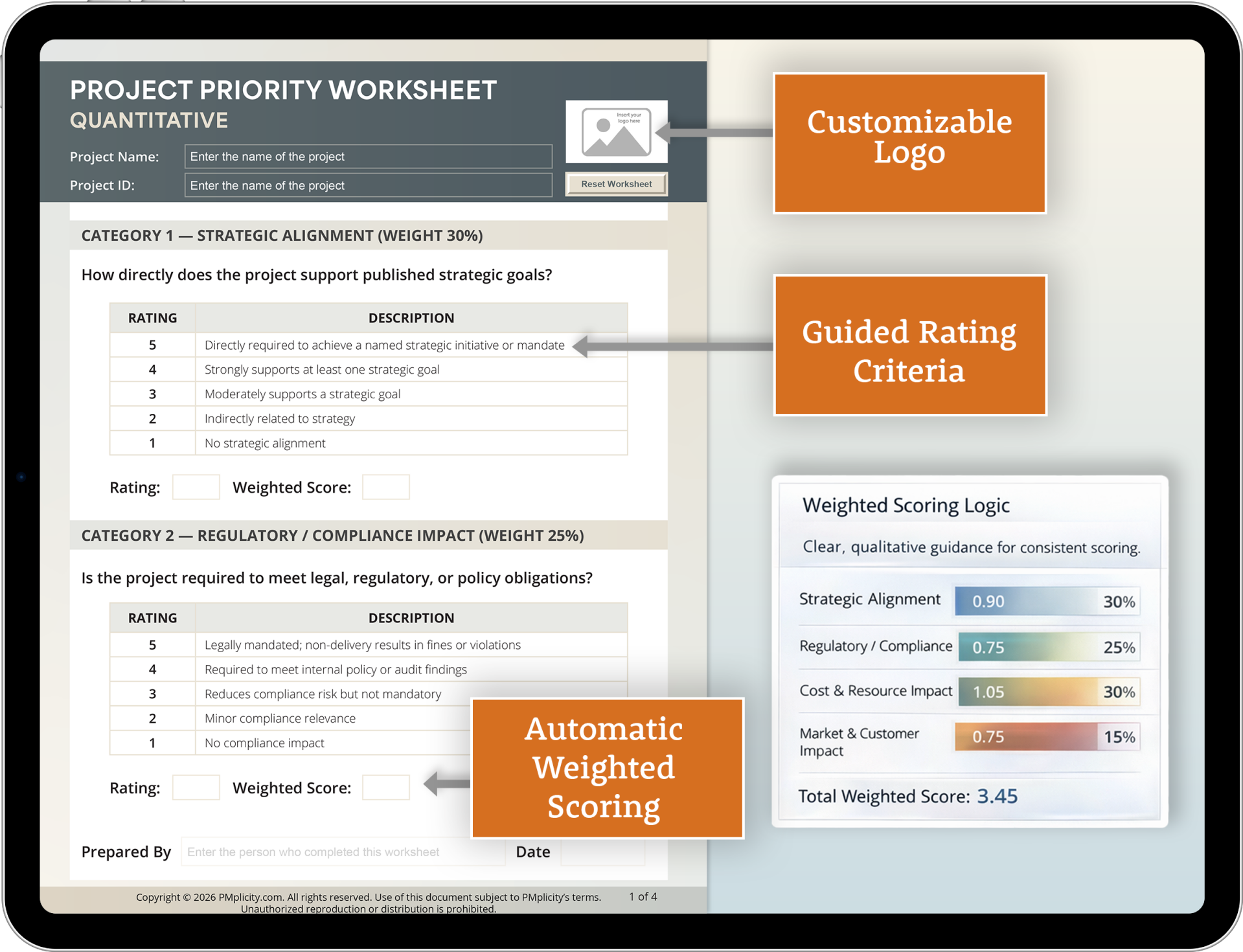
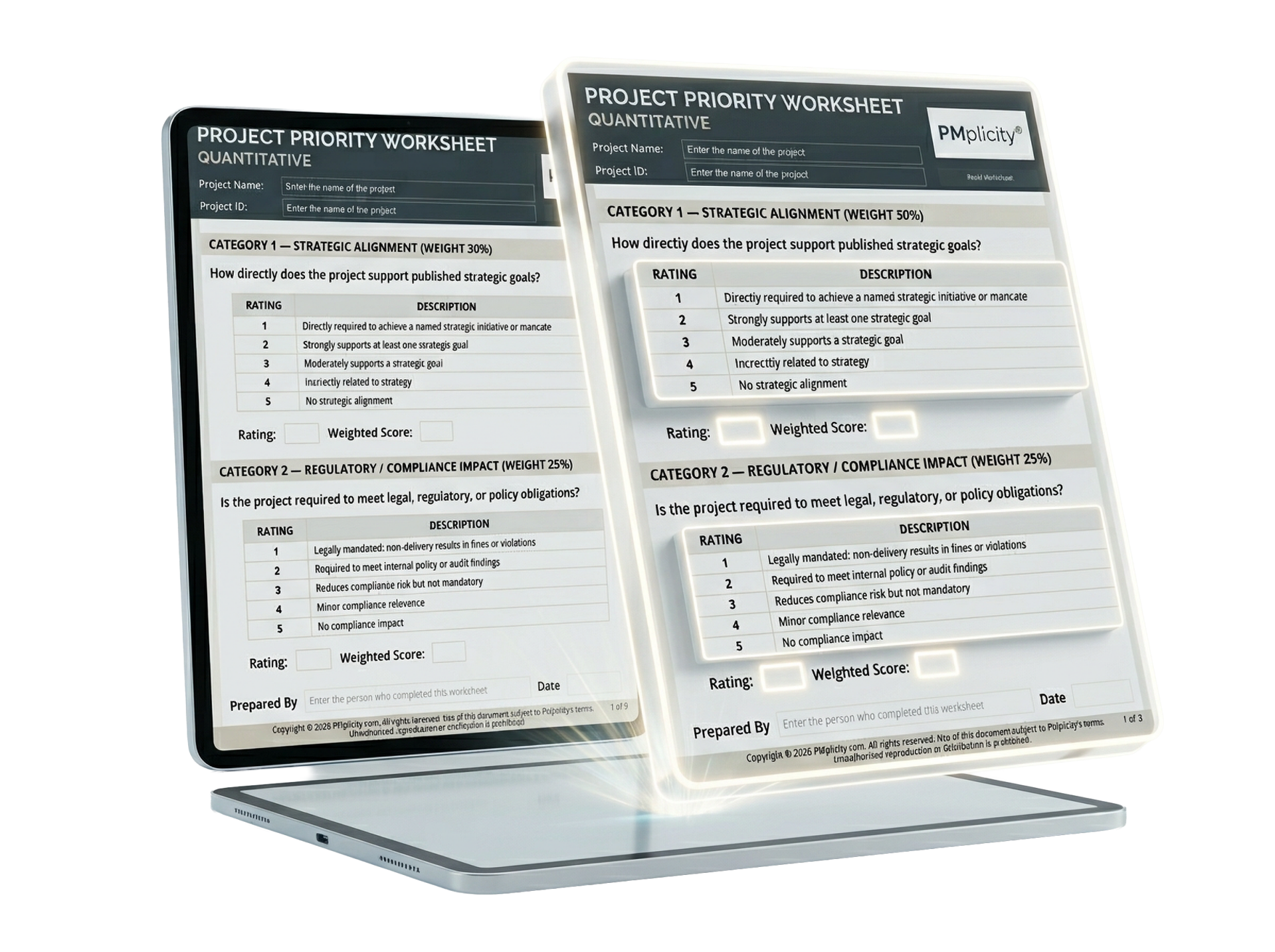
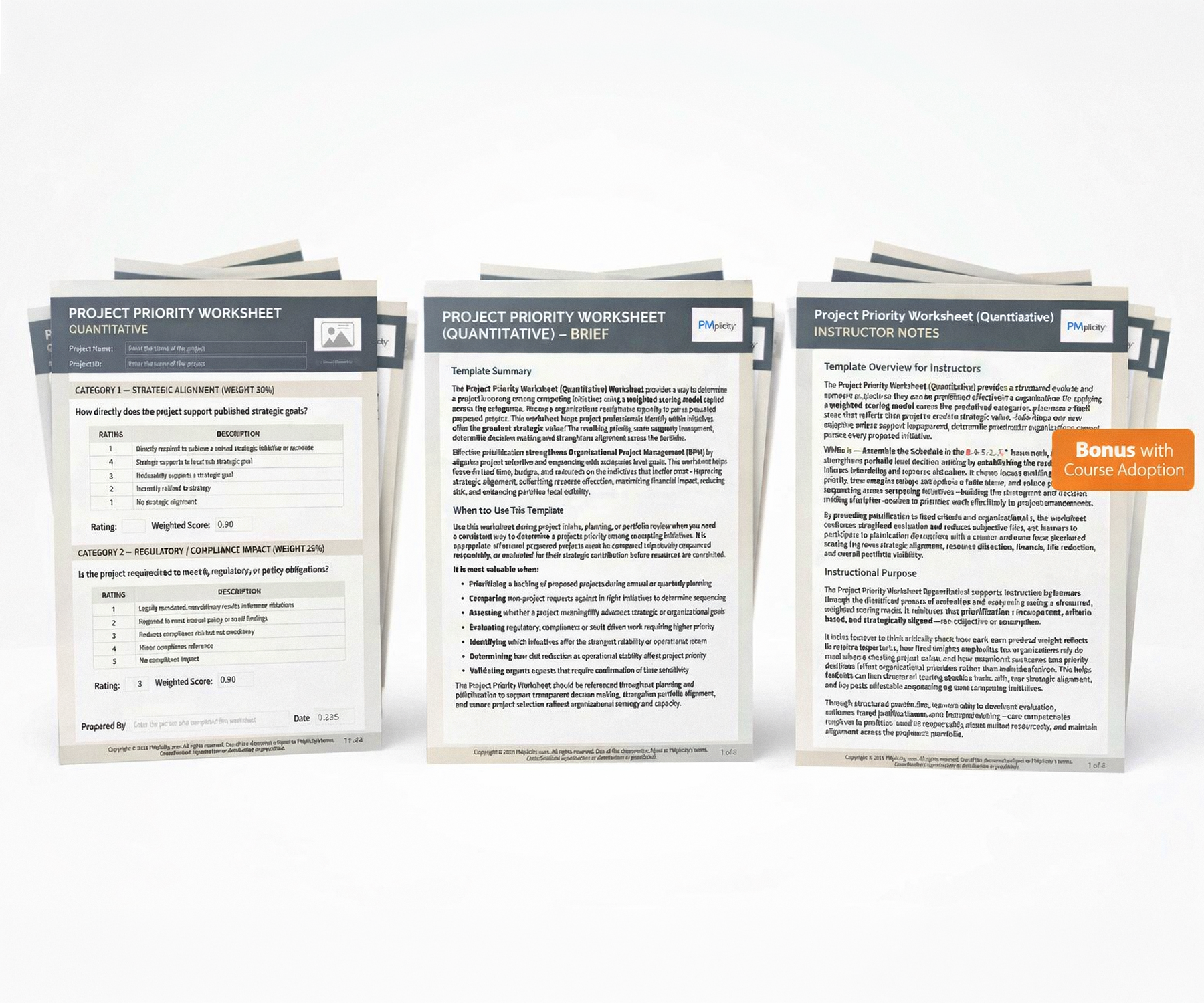
- Interactive Project Priority Worksheet — with built‑in scoring logic to calculate weighted scores and the total priority score
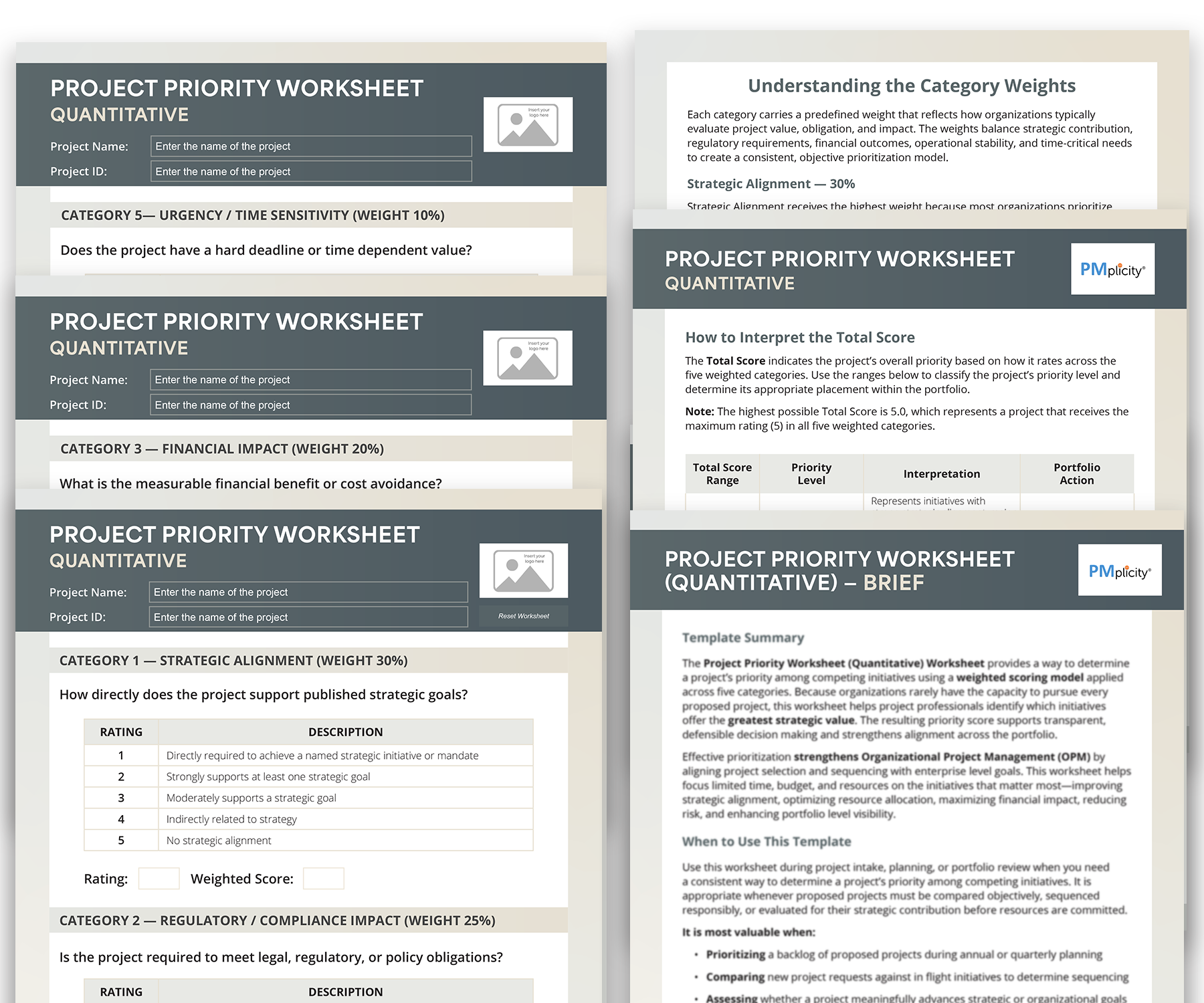
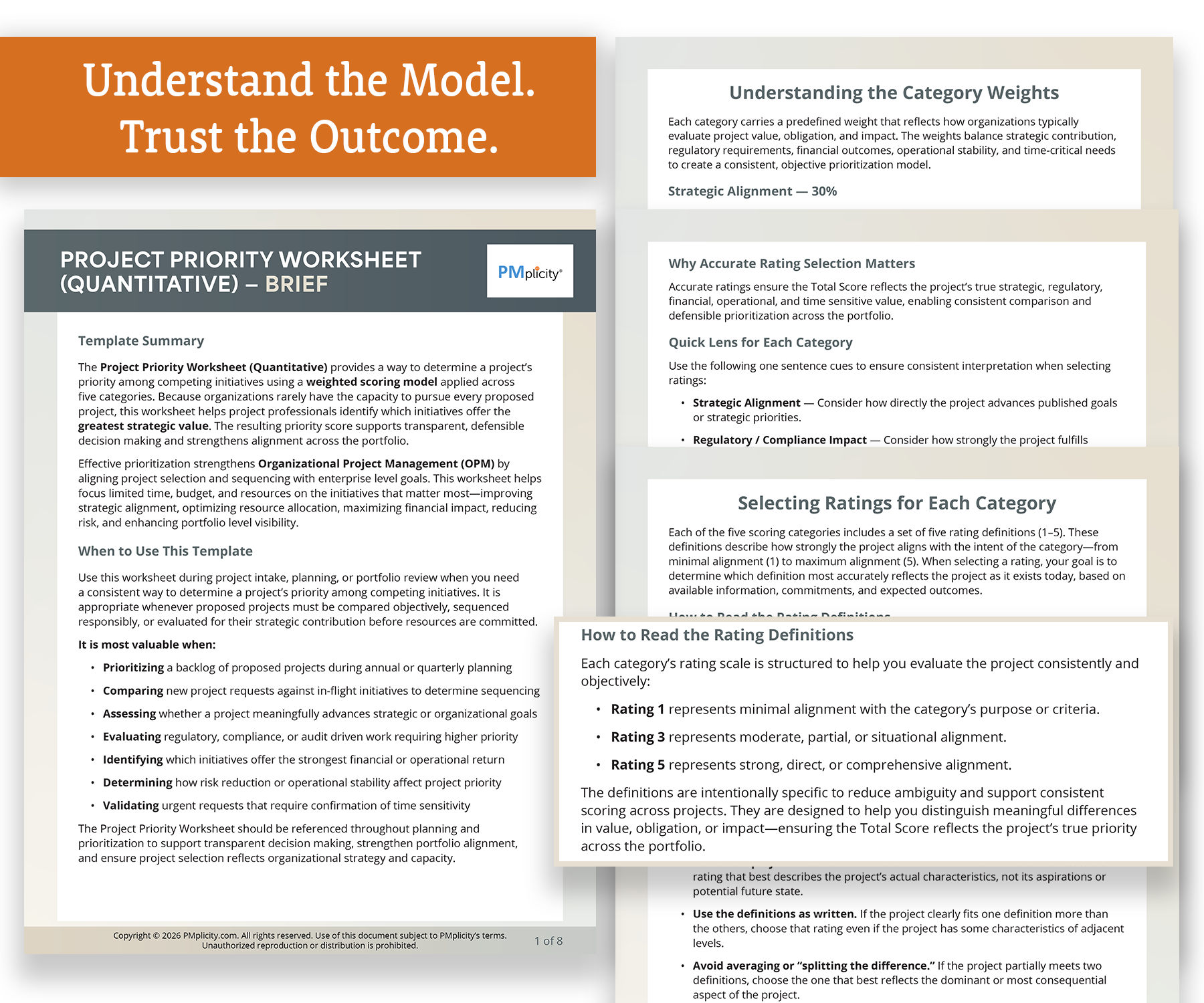
- Comprehensive Worksheet Brief — with guidance on scoring, weighting, and interpreting results
- Bonus Instructor Notes — for instructors adopting the Project Management B.A.S.I.C.S. book

Your Worksheet Brief
The comprehensive Worksheet Brief explains the five‑category evaluation model, provides guidance for selecting accurate ratings, clarifies the weighting and scoring logic, and outlines when portfolio overrides may be appropriate—supporting consistent, transparent prioritization across intake, planning, and review.
Feature Highlights
- Objective scoring model — converts qualitative judgments into quantifiable results for clear, defensible prioritization
- Guided rating structure — supports consistent interpretation of rating definitions across all five categories
- Tab‑order navigation — enables fast, efficient data entry without breaking workflow
- Protected layout — maintains formatting integrity and ensures consistent use across teams
- Clean, modern design — communicates project information with clarity and professional polish
- High‑resolution print readiness — delivers crisp, stakeholder‑ready output for presentations and reviews
- Customizable logo button — provides one‑click professional branding for internal or instructional use


Who This Template Is For
- PMO and portfolio leaders who need a consistent, defensible method for evaluating and sequencing initiatives
- Project and program managers responsible for prioritizing work and communicating rationale to stakeholders
- Business analysts and product managers who support value assessment and structured decision making
- Department and functional leaders who submit project requests and need a clear way to articulate priority
- Students and instructors learning or teaching real‑world project prioritization
What This Template Helps You Achieve
- Reveal true project value with a Total Score that reflects strategic, regulatory, financial, operational, and time‑sensitive impact.
- Strengthen portfolio decision‑making by enabling objective comparison across all proposals.
- Reduce bias and debate through a transparent, criteria‑driven scoring model.
- Improve sequencing and planning by clarifying which initiatives deliver the greatest weighted contribution.
- Increase organizational consistency by standardizing how projects are evaluated and prioritized.
- Advance OPM maturity with a repeatable, defensible prioritization method.